Monday, May 26, 2014

"Beyond Common Core"

Below is a review of the "Georgia Visions Model" (mentioned in previous post) written by researcher Stephanie Block titled, "Beyond Common Core: transforming family-centered society to society-centered family" (Spero News, 4/29/14). Below is her article in its entirety, reprinted with her permission.

Being on the email list of veteran education researcher and author Charlotte Iserbyt is like being in the passenger seat next to a particularly fast driver.  As uncomfortable as the position may be, jumping out of the car would be worse.

Iserbyt was a senior policy advisor in the Office of Educational Research and Improvement (OERI), U.S. Department of Education, during the first Reagan Administration, where she had access to volumes of education documents.  Subsequently, she published the Deliberate Dumbing Down of America and founded 3D Research Co, exposing the dangerous direction the American educational system has been heading.

Decades of battle and a sense that time is growing short have made her impatient with those who miss the forest for the trees.  “Forget Communist Core,” she writes, referring to Common Core, a project to push national standards that are designed to produce a “workforce ready” population – “this is coming down the pike, which will include Communist Core, even if you think you have repealed it.  This is the agenda to expand education into Limited Learning for Lifelong Labor.”

Iserbyt has just sent everyone on her list a copy of “A Vision for Public Education: Equity and Excellence,” prepared by the Georgia School Boards Association and published in 2010.  She and the other education researchers behind the 8-disk DVD series Exposing the Global Road to Ruin Through Education see this “vision” as a fairly good example of what’s next in the pipeline, proffered at a point when citizens are weary of battle and feeling they have made their voices heard.  


What is the Georgia School Boards Association’s “vision” for public education?

1.  It is transformative, changing the current education system “into one that is relevant for today’s children and youth,” and preparing them for “life” and “careers.” (p. 1) The vision paper states that its purpose “is to offer a series of recommendations that, taken in total, implemented effectively over our state, and supported by the citizens of the state and policymakers, will transform public education in Georgia.” (p. 2)

2.  It is comprehensive, integrating “[e]ffective structures and processes” of the education system “with purposeful alignment of the roles and responsibilities” of others aspects of society. (p. 1)

3.  Its focus is national. “Any undertaking to alter significantly the form, structure, delivery mechanism, or goals of public education cannot ignore the federal government’s involvement and influence.” (p.1)

These elements intersect with one another.  The creation of a “comprehensive,” national education/workforce system essentially transforms a locally-controlled, system that is focused primarily on academics.  “Transformation,” in this vision, is more radical than finding the best ways to insure academic proficiency for the most students.  It “rethinks” everything.


Recommendation 8.2, for example (p 121) would have us “[e]stablish each school as the center or hub of the community in which it exists.” A “partnership” among schools, families, and communities is advanced not only to promote student achievement but the “useful services or resources” schools can provide “their community partners.”   Those “services and resources” are, among other things, a trained workforce.

These “community hubs” called “schools” would be wonders of socialist achievement.  “[M]obilized communities” would “fill gaps in education, health, family support, childcare,
economic support (income, job training, transportation), and related human services” as well as linking “services to bring more continuous and convenient help to families.” (p. 20)

They would “help” to raise the youngest members of society because “sustained preschool investments are a cost-effective way to ensure a better educated workforce, boosting long-term economic growth.” (p. 26)  The state – referring to Georgia but, clearly, in a nationalized system, Georgia is Every State – must “ensure that families needing childcare can find nurturing, safe, high-quality, and affordable care.” (p. 21)

The Early Learning and Student Success component assures that by age five, every child is ready for school, able to, among other things, “play well with others, pay attention, respond positively to teachers’ instructions, communicate well verbally,” and can eagerly participant in classroom activities. “Starting at the top, state agencies are responsible for making informed human services policy decisions, committing sufficient resources, and connecting programs and services to all children who need them. Across all early care and education arrangements for infants, toddlers, and preschoolers, state agencies have the responsibility for setting program standards  for health, safety, staffing, and learning standards for what children should be encouraged to know, do, and experience. Furthermore, state agencies often determine professional development criteria and decide policies for compensation of early care and education professionals and program evaluation of the impact of services on child and family well-being.” (p. 22)

“Parents, families, and communities have a shared responsibility to engage in preparing children for school.” (p. 23)  Since schools are “sharing” in the responsibility of raising children, they must not lose track of their charges.  Under the heading of “Longitudinal Data System to Ensure Real-Time Access to Essential Data” the Georgia vision paper looks forward to the development of a “comprehensive data collection and management system” that monitors a student’s eBooks and laptop use, customizes the delivery of courseware,  and collects “data about school and student performance” in a national database. (p. 62)

The paper recognizes that this view of “shared responsibility” has its own problems. “The roles and responsibilities at the national, state, and local levels are not always clear cut and may lead to confusion regarding who is actually in charge of the education of children.” (p 97)  Establishing accountability is, therefore, a priority and there are a number of recommendations proposing to accomplish this, including establishment of “a coherent and comprehensive plan for leader succession. A major component of a viable plan is the identification of individuals within the organization who have potential for growth and ensuring they are provided professional development opportunities that will prepare them for higher level leadership positions. (p 99)

Who identifies these individuals?  We are never told.  Who holds whom accountable?  These are wondrous mysteries.  However, the community hubs called schools, with their “shared responsibility” for raising children require expanded resources, as schools “become the site for healthcare delivery, recreational activities, and other community activities.” (p 58)

The community hubs called schools would be coordinated across the country by means of national standards.  This is an idea that goes back quite a bit, with the vision paper specifically referencing a 1990 report from the National Center on Education and the Economy’s Commission on the Skills of  the American Workforce titled “America’s Choice: High Skills or Low Wages!”  The commission recommended nationally established educational performance standards, set for all students, with a Certificate of Initial Mastery to be awarded upon the student’s passing a series of assessments. “The certificate would qualify the student to enter college, the workforce, or technical training.” (p. 6) Georgia’s adoption of the national Common Core standards in 2010 was clearly an outgrowth of this idea, and drove the state’s curriculum formation. (p. 43)

The “transformation” proffered by the Georgia “Vision for Public Education” is about a good deal more than education.  It is transformation from a family-centered society, in which the family has the ultimate responsibility to educate and care for its children, to a society-centered family, in which various social structures attempt to “scientifically” determine how to do the job, revising the program, again and again, after each failure.

This vision goes well beyond Common Core, though national standards are a piece of the picture.  Iserbyt’s frustration and impatience are justified.  This “transformation” has been attempted before.


NOTE: Stephanie Block also posted an online review of  Exposing the Global Road to Ruin Through Education (DVD). Excerpts are below.
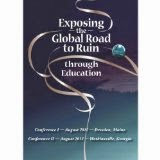
Intelligent, informed discussion about public education is hard to find. To address this, several educators and researchers organized two conferences – one in Maine (August, 2012) and one in Georgia (August, 2013) – to explain their various insights and concerns. These talks were then organized into an eight-disk DVD set, 'Exposing the Global Road to Ruin Through Education', which is available for sale on Amazon.com...

There is much more discussion about pseudo-conservative representation, social engineering, and the objectives, having little to do with traditional educational objectives. These are thoughtful, deeply-researched presentations by people who have spent many years gathering evidence for their positions. They draw extensively from source documents – government handbooks, tests that have been administered in various school districts, and the writing of reformers whose theories are very much driving current programs.

There is also a section in which activists from various states describe how they are informing their legislators and fellow citizens and Iserbyt concludes the conference with strategies on how to reclaim our educational system. She begins by holding up a page titled “Flow Chart of Educational Process and Needs” that has been taken from a 1968 position paper for Chicago inner-city schools. It shows that the school is to be organized in such a way that teachers, students, and communities having certain characteristics will be changed to have new, more “desirable” characteristics.

Who are the individuals deciding what these desirable characteristics are to be? They aren’t the student’s parents or even religious leaders or the  community itself but are entities outside the community. To her, this is a wonderfully graphic example of the movement toward collectivism that concerns the activists presenting the Global Road to Ruin through Education project. Authentic research (such as provided by this graphic and the wealth of other material included in the disk sense) is the cornerstone of any action plan to take back our educational systems.

She warns against joining groups and movements (easily manipulated from the outside) but to instead share information, individual by individual, especially with one’s elected officials, one’s educators, and local businesspeople...

Public & Private Partnerships:

HOW ACADEMICS MORPHED INTO  LIFELONG WORKFORCE TRAINING AND COMMUNITY SCHOOLS:

The transition from academics to work force training required getting the public, private and religious sectors on board. The Communist Manifesto calls for merger of government with industry. U.S. workforce training calls for merger of government and private industry. (Corporate Fascism). Identical systems.

This happened when President Reagan set up the White House Private Sector Initiative, 734 Jackson Place, N.W., Washington, D.C. Membership listed on The White House letterhead reads like a “Who’s Who” of individuals in government agencies, universities, tax-exempt foundations, non-governmental organizations, business, media, labor unions, and religion.  I have bolded the most  important organizations as they relate to the implementation of  community education under the umbrella of  the community school, run by unelected council, providing ALL services lifelong being implemented in the USA right now.

My underscoring the importance of these two organizations must not leave the reader with the idea that ALL the other persons and organizations are of minor importance.  They are of great importance, but since legislation in Congress and activities in the states ("Georgia Visions," e.g., read HERE and see HERE)  presently calls for the unelected  community school concept I am, in this particular posting, focusing on this issue above all. (Charter schools with their unelected councils are leading the country into  the unelected council form of government)

The two organizations which support this unelective form of government are:
  • National Center for Citizen Involvement 
  • C.S. Mott Foundation, the major force and funder of Community Education going back at least fifty years.  

See research below excerpted from my book the deliberate dumbing down of america for both organizations:

(1) The National Center for Citizen Involvement issued a report entitled The American Volunteer, 1981: Statistics on Volunteers. One revealing statement from the report follows:
Volunteer Population: 92 million, 44% of whom work alone in an informal, unstructured environment on projects of their own choice; the rest of whom work in structured activities.
[Ed. Note: Obviously, the major effort related to volunteerism was—and is—to convince the 44% who are, in effect, “doing their own thing,” to join in the government-private sector “Points of Light” volunteerism partnership initiated by then-President George Bush, as well as President Bill Clinton’s AmeriCorps. That way they will work only on politically correct and government-approved projects.]

(2) The Mott Foundation was one of the funders of The Goodlad Study, see earlier blog post,
 which included the important book Communities and their Schools and recommended for study
 Communist China as the prime example of community schools/community education .

The names of some individuals on the task force follow:
  • William Aramony, president, United Way;
  • William J. Baroody, Jr., president, American Enterprise Institute; 
  • Helen G. Boosalis, mayor,
  • City of Lincoln, Nebraska; 
  • Terence Cardinal Cooke, archbishop of New York; 
  • Governor Pierre S.
  • Dupont, Delaware; 
  • Senator David Durenberger; 
  • Luis A. Ferre, former governor of Puerto Rico;
  • John Gardner, chairman, Independent Sector; 
  • Edward Hill, pastor, Mt. Zion Baptist Church;
  • Michael S. Joyce, executive director, 
  • John M. Olin Foundation; Edward H. Kiernan, president, International Association of Police; 
  • Arthur Levitt, Jr., chairman, American Stock Exchange;
  • Richard W. Lyman, president, Rockefeller Foundation; 
  • Elder Thomas S. Monson, The Mormon Church; 
  • William C. Norris, chairman and CEO, Control Data Corporation; 
  • George Romney, chairman, National Center for Citizen Involvement; 
  • C. William Verity, Jr., chairman, Armco Steel, Inc.; 
  • Jeri J. Winger, first vice president, General Federation of Women’s Clubs; 
  • Thomas H. Wyman, president, CBS, Inc.; and 
  • William S. White, president, C.S. Mott Foundation.

This totally new and un-American concept of partnerships between public and private sector has been readily accepted by our elected officials who ignore its roots in socialism and its implications for the discontinuation of our representative form of government and accountability to the taxpayers. Under the “partnership” process, determining responsibility when something goes wrong is like pinning jello to the wall.

Such a change in government, if presented in clear language to citizens at the polls, would be rejected. However, when implemented gradually, using the Marxist-Hegelian Dialectic, citizens don’t even notice what is happening. The shift is away from elected representatives. In time, after voters have become even more disenchanted with the candidates and election results, fewer and fewer citizens will vote. At that point a highly-respected member of the public will enter the picture to propose a solution to the problem: some sort of compromise toward parliamentary form of government found in socialist democracies which will be acceptable to Americans unfamiliar with the protections guaranteed by the U.S. Constitution.

One says to oneself, confidently, “This will never happen.” Look around you. What do you see? Site-based management in your local schools, transferring decision-making, traditionally exercised by elected school boards, to politically correct appointees and the creation of unelected task forces at all government levels; proposals to “separate school and state” which make no mention of governmental and social structure consequences—efforts to have government money (taxes) pay for services delivered by private religious or homeschools, etc., with no public representation. There can be no accountability to the taxpayers under a system so alien to the United States’ form of representative government.

How clean, neat and tidy. Wholesale destruction of an entire, wonderful system of government
without firing a shot.

As a U.S. Department of Education liaison with The White House during the early days of
this initiative this writer inquired of one of President Reagan’s political appointees whether this
initiative, was not corporate fascism; a politically incorrect question that resulted in someone
else replacing me as Liaison with The White House.

Charter Schools & Choice:

THEIR  INTERNATIONAL ROOTS

Again, charter schools and "choice" seem to have their roots deep in Leftist/socialist/fascist political and economic theory. The following article relates to fact that charter schools/contract schools and school choice are essential for Soviet-style polytechnical work force training and are necessary for global planned economy. Interesting that  these meetings took place after President Reagan had signed the extensive education agreements with President Gorbachev of the Soviet Union in 1985 and in 1989 and after the Soviet Union had ostensibly collapsed.

The third paragraph, highlighted in red, is plain scary:


THE EFFECTIVE SCHOOL REPORT’S FEBRUARY 1992 ISSUE CARRIED AN ARTICLE ENTITLED “Free Education in a Free Society” by Nick Zienau of England’s Educational Consultancy. It reads in part:

This article describes a project which began at a conference organized in September 1991 to discuss possibilities for projects between East and West which might assist the process of educational reform in Russia and the other republics formerly of the USSR.... An important part of becoming convinced that this was worthwhile was to discover that there was a common set of values and ideas about the changes facing education systems whether in Russia, the U.S. or Europe.… A key theme for us was, therefore, that those ideas which hitherto have been seen as progressive alternatives and often dangerously radical in educational theory and practice will increasingly become part of mainstream education practice and thinking.

A second key principle was the idea that increasingly education will cease to be a state monopoly and must have a relationship with the free market. This seems related to the idea of individual enterprise and choice. Our belief is that it is helpful to educational reform and therefore to this project to form collaborative relationships between the state and organizations acting in the free market. This will help to allow individual autonomy, enterprise, etc., to flourish and allow relationships between those involved in reform not to be based on fixed budgets and supply side economics. It will require us to have clear contracts between participants. If we have ideas about how to go about training teachers, we will learn these best from each other by doing it together and that only in this way can the project be effective as an educational intervention between nations, between innovators or between individuals.

…We believe in an exchange of learning and in the idea that there is likely to be as much that the West can learn from eastern partners as the other way around. We believe that a key to what this learning might be about is that the West’s knowledge of how to do things in education, how to make changes for instance in the technology, is matched by pedagogic systems and theories which have been highly developed in Russia. We believe that these theories and practices can form the basis of radical curriculum innovation and organizational reform.

Finally, we believe in a project that has an organic structure. It will have two nodes, one in the east and one in the west, and it will span three continents. It will have a core structure which must have a small financial base and it will have participating organizations and individuals. However, the form of the organization must be one in which projects can be developed from the center core and not controlled by it. Participants should be free to create these without relying on central funding or permission as long as they can fit into this set of agreed values which the project will develop. 

First among these is the theme of teacher education (both pre- and in-service). We see this as the key way of changing and influencing education.…

Thirdly, we hope to gain the active involvement of industry and commerce. It will be the concern of the project to encourage such collaboration on both sides, both in the Eastern consortium and in the Western consortium. We understand it as an important way of ensuring that education is relevant to society, understood and cared about, and seen as connected to sources of wealth creation in society. Certainly in the East and also, we would venture, increasingly in the West, active involvement of industry and commerce is essential in order to obtain the funds and commitment necessary for educational reform to succeed. This means that in practice we will take every available opportunity to involve actively avantgarde leaders of industry and commerce both in funding, supporting and implementing the project. The important criteria for collaboration must be that there is sufficient congruence of ethics and values about the goals and methods of the project.

Fourthly, in order to “practice what we preach,” we believe that our meetings and projects events do actively demonstrate and work with the pedagogic systems, that the learning should be managed in a conscious way. We therefore will make it a feature of the project that we focus on the skills and strategies of managing learning in an international context whether it be in the seminars, conferences, exchange trips or consultations. 

Fifth, it will be important to formulate structures and models of organization that encourage independence and autonomy through small groups.... The education reform process will be built on the work of many small groups making their own decisions. We will need to build into our project structure of contract making, interdependence with autonomy and hold it within a regulated and boundaried field of action. These kinds of structures and models are new forms of organization for both East and West and represent a move away from hierarchy and role-dominated cultures.

The Consortium activity has the official support of the Minister of Education for the Russian Republic, Dr. Edouard Dneprov, and a close liaison has been established with the Ministry. On the Western side, the consortium at present includes consultants, trainers, and researchers from the UK, Netherlands and the USA who aim in the first place to act as a bridge into the various educational networks in the West. These will include higher education initiatives, networks of alternative schools, organizations involved in innovative
teacher training, consulting organizations, industrial and commercial organizations concerned with pedagogical innovation. They are also currently working to obtain funding and support among possible private and public sector sponsors.

Signed Nick Zienau

[Ed. Note: Considerable space has been devoted to quotes from The Effective School Report due to their obvious close relationship to activities in American education restructuring; i.e., choice, charter schools, school-business partnerships, school-to-work legislation, The New American Schools Development Corporation, site-based management, merger of public and private sectors, and the Skinnerian workforce training methodology. This important article justifies the validity of concerns expressed by Americans opposed to the U.S.-Soviet and Carnegie-Soviet education agreements signed in 1985 by President Reagan, Mikhail Gorbachev, Carnegie Corporation and the then-Soviet Academy of Sciences, respectively.]

All color and bold emphasis above was added. For more information see my book the deliberate dumbing down of america, pp. 292-294 where this was extracted.

Saturday, May 24, 2014

School Choice from the Left

I consider this short interview with Santilli the most important one I have ever done regarding tax-funded school "choice." In this interview I discuss a key SMOKING GUN document...

Start listening at 33.03

This radio interview is also archived HERE.

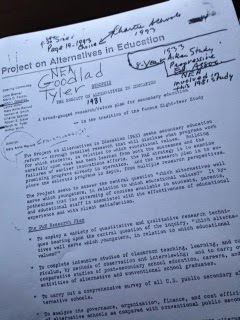
There is important research in this interview regarding school choice/charters coming from the hard Left.  I obtained the original 1981 proposal for funding from U.S. Dept. of Education when it came across my desk at the time, on John Dewey Society letterhead listing leading leftist American education change agent John Goodlad, etc., promoting school choice and charters. This promotion came from the hard Left which knew "it" couldn't get the average homeschool Mom or average public school Dad to accept it from "them." So the Left got the neoconservatives to promote it. Disgusting? You bet! Surprise? No!

Please be sure to forward this interview I did with Pete Santilli to ALL your contacts, especially to those who do NOT understand that the tax-funded school "choice" agenda comes from the hard Left and has been in the works since at least 1981, supported by guess who? The NEA and well known leftist education change agents.

Tax-Funded school "choice" came from the hard Left, including the NEA, but was adopted by the Neoconservative Right, who pushed the agenda for tax-funded school "choice." In other words, the NEOCONS ARE CARRYING THE WATER FOR THE HARD LEFT!!!!

I consider this to be the most important document that I took out of my office before I got myself fired for leaking the technology document to the press.

TAX-FUNDED SCHOOL CHOICE/CHARTER SCHOOL PROPOSALS
ARE THE TROJAN HORSE.
COMMON CORE IS A BRILLIANT DIVERSION.

  • Click on the earlier May 19 post on my blog, "Charter Schools - Brainchild of the Left... ...that became the Agenda of the Political Right," 
  • Go to American Deception.com and download the 1981 Project on Alternatives in Education. A broad-gauged research/reform plan for secondary education---in the tradition of the famous Eight-Year Study, headed up by amongst other leading change agents, John Goodlad and Ralph W. Tyler. Extremely important document on John Dewey Society letterhead, which spells out high school restructuring and calls for revolutionary changes in education suitable for school to work training. Clearly part of school choice agenda. NEA involvement. Below is the first page:

NOTE: I also have my own radio show where I frequently discuss all of this. The archives can be accessed HERE.

Only the FEELING of Freedom?!


Here is an alarming quote from the B.F. Skinner website, with added emphasis:

Operant behavior is shaped and maintained by its consequences for the individual. Both processes have controversial features. Neither one seems to have any place for a prior plan or purposes. In both, selection replaces creation.
Personal freedom also seems threatened. It is only the feeling of freedom, however, which is affected. Those who respond because their behavior has had positively reinforcing consequences usually feel free. They seem to be doing what they want to do. Those who respond because the reinforcement has been negative and who are therefore avoiding or escaping from punishment are doing what they have to do and do not feel free. These distinctions do not involve the fact of freedom. http://www.bfskinner.org/behavioral-science/definition/

Friday, May 23, 2014

Memorial Day Tribute


Let's remember Memorial Day and include, along with our tribute to all those who gave their lives and were injured in wars, a similar tribute to those who fought and often won very lonely battles in the schools since the early 1900s: those who engaged the enemy on local school boards, who were defamed by the controlled media; activists for our children in their towns and at their state capitols;  those who understood the importance of preserving the integrity of academic education and  instruction in sound morals and values.

These unsung heroes, whose names are being compiled for a later post, had the courage to speak out regarding the attack on our nation and on our  children's intellects and values.

Let our memories of them strengthen our efforts at this critical juncture in our nation's history.  

God bless America!

Orchestrated Consensus
 

In retrospect, I had just found out that the United States was engaged in war. People write important books about war: books documenting the battles fought, the names of the generals involved, the names of those who fired the first shot. This book is simply a history book about another kind of war:
  • one fought using psychological methods;
  • a one-hundred-year war;
  • a different, more deadly war than any in which our country has ever been involved;
  • a war about which the average American hasn’t the foggiest idea.
The reason Americans do not understand this war is because it has been fought in secret—in the schools of our nation, targeting our children who are captive in classrooms. The wagers of this war are using very sophisticated and effective tools:
  • Hegelian Dialectic (common ground, consensus and compromise)
  • Gradualism (two steps forward; one step backward)
  • Semantic deception (redefining terms to get agreement without understanding).
The Hegelian Dialectic5 is a process formulated by the German philosopher Georg Wilhelm Friedrich Hegel (1770–1831) and used by Karl Marx in codifying revolutionary Communism as dialectical materialism. This process can be illustrated as: 

Synthesis
(consensus)
                              Thesis                                                               Antithesis

The “Thesis” represents either an established practice or point of view which is pitted against the “Antithesis”—usually a crisis of opposition fabricated or created by change agents—causing the “Thesis” to compromise itself, incorporating some part of the “Antithesis” to produce the “Synthesis”—sometimes called consensus. This is the primary tool in the bag of tricks used by change agents who are trained to direct this process all over the country; much like the in-service training I received. A good example of this concept was voiced by T.H. Bell when he was U.S. Secretary of Education: “[We] need to create a crisis to get consensus in order to bring about change.” (The reader might be reminded that it was under T.H. Bell’s direction that the U.S. Department of Education implemented the changes “suggested” by A Nation at Risk—the alarm that was sounded in the early 1980s to announce the “crisis” in education.)
 

Since we have been, as a nation, so relentlessly exposed to this Hegelian dialectical process (which is essential to the smooth operation of the “system”) under the guise of “reaching consensus” in our involvement in parent-teacher organizations, on school boards, in legislatures, and even in goal setting in community service organizations and groups—including our churches—I want to explain clearly how it works in a practical application. A good example with which most of us can identify involves property taxes for local schools. Let us consider an example from Michigan—
 

The internationalist change agents must abolish local control (the “Thesis”) in order to restructure our schools from academics to global workforce training (the “Synthesis”). Funding of education with the property tax allows local control, but it also enables the change agents and teachers’ unions to create higher and higher school budgets paid for with higher taxes, thus infuriating homeowners. Eventually, property owners accept the change agents’ radical proposal (the “Anti- thesis”) to reduce their property taxes by transferring education funding from the local property tax to the state income tax. Thus, the change agents accomplish their ultimate goal; the transfer of funding of education from the local level to the state level. When this transfer occurs it increases state/federal control and funding, leading to the federal/internationalist goal of implementing global workforce training through the schools (the “Synthesis”).

Excerpted from the Preface to the deliberate dumbing down of america, pp. xvii-xviii. 

Thursday, May 22, 2014

SOCIALIST EDUCATION FOR AMERICA


The following UNESCO article published in 1977 confirms the fact that the United States education system has become a socialist education system, marching in tandem with all socialist/communist nations :


DEVELOPMENT OF EDUCATIONAL TECHNOLOGY IN CENTRAL AND EASTERN EUROPE STUDIES: Division of Structures, Content, Methods and Techniques of Education was published and distributed by United Nations Educational, Scientific, and Cultural Organization (UNESCO: Paris: ED–77/WS/133:English Edition) in November of 1977. The author is including excerpts from the “Section onMethods, Materials and Techniques” so that the reader will see how America 2000/Goals 2000 restructuring is identical to education in the former Eastern European communist countries. The reader must also remember that American education is under the direction of UNESCO due to our membership in the United Nations. Excerpts follow:
The development of educational technology in the Central and Eastern European countries, as commissioned by the UNESCO Secretariat, is summarized on the basis of the oral and written information supplied by the countries having attended the Budapest International Seminar on Educational Technology in 1976. The countries involved are as follows: People’s Republic of Bulgaria, Socialist Republic of Czechoslovakia, Republic of Finland, Republic of Greece, Socialist Federal Republic of Yugoslavia, People’s Republic of Poland, People’s Republic of Hungary, German Democratic Republic, Union of Soviet Socialist Republics. Data were also supplied by the Socialist Republic of Rumania which could not participate in the Seminar.

The factors exercising a decisive influence on the present standards of the application
of educational technology and the strategies and rate of its further spread in the countries listed above are as follows:

a. the overwhelming majority of the countries represented (8 out of 10) are socialist states;
b. except for the Soviet Union and Finland, the nations concerned can be classified into the category of fairly developed countries from the technological point of view.

On the basis of the above factors some of the specific characteristics of the development of educational technology will be underlined. It follows from the essence of the socialist structure  of the state in the countries concerned, except Finland and Greece, that their educational system is centralized. This creates an extremely favourable situation for central state measures designed to modernize education. The socialist state possesses the means necessary for education... for the widespread use of methodology based on solid technological foundations and of the media and means of educational technology.... In a situation in which millions of students learn and hundreds of thousands of educationalists teach, on the basis of unified curricula, decisions involving the development of the method to be adopted in education and of the media and aids of educational technology call for very thorough preparatory work.…

The socialist countries also have a substantial advantage from the aspect of the development of educational technology because the training and in-service training of teachers rest on a uniform basis. In addition, curricula are uniform in the individual countries and for the different types of schools harmony between the curricular activities and the development of educational technology can be therefore established comparatively easily.
[Ed. Note: A flow chart on page 11 of the study includes under “Factors Influencing the Introduction of Educational Technology” all the components found in American educational restructuring as follows: Adequate Curricula; System of Objectives; Systems of Means of Assessment; Media System; Ensuring Appropriate Facilities (school building, hardware, media); Adequately Trained Teachers (basic training, in-service/further training/information); Research and Development; and International Cooperation.]