Tuesday, October 14, 2014

SKINNER for DUMMIES

DAY 14: Skinner Horror Files

THE BIG LIE EXPOSED 
Direct from the horse's mouth

"It is always to be kept in mind that these principles
are quite in contrast to “rote learning” or drill.

"In rote learning, many wrong responses are permitted to occur,
and the student eventually learns to develop his own prompts
often to a relatively unrelated series of stimuli.

"Programmed learning, on the other hand,
is designed to take advantage of the inherent organization of the subject matter
or of the behavior of the subject in relation to the subject matter
in shaping up the student’s learning."

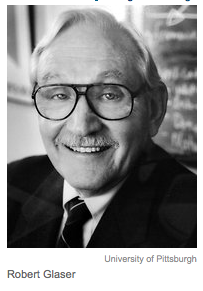
~Robert Glaser

The quotation above is proof positive. Parents and teachers have been misled -- deliberately lied to -- by the neoconservative leadership pushing the Skinner method and passage of the Reading Excellence Act. They have been told over a period of thirty years that Skinnerian Direct Instruction and Mastery Learning are merely rote learning or drill! I myself have had the experience of that excuse (lie) thrown in my face on numerous occasions. No wonder my book Back to Basics Reform or OBE Skinnerian International Curriculum was boycotted from 1985 to the present. 

The neoconservative Right leadership, in bed with the hard Left globalists and the corporations, needs the Skinner method for the Soviet polytech workforce training; i.e., using our "trained" children to spin off profits for the global elite! 

The statement by Professor Robert Glaser at the top of this post is evidence documenting that Skinnerian Direct Instruction/Mastery Learning is NOT simple rote learning. Glaser himself is very clear that the Skinner method denies the very freedom which comes with rote learning. Lest the skeptical reader thinks that this quote was taken out of context, read the following excerpt from Programmed Learning: Evolving Principles and Industrial Applications (1961), which included Glaser's "Principles of Programming":
Putting the Student on His Own
The next point is called “fading or vanishing.” Thus far it has been indicated that programming techniques utilize the principle of reinforcement, the principle of prompting. The next one we come to is the principle of fading or vanishing. This principle involves the gradual removal of prompts or cues, so that by the time the student has completed the lesson, he is responding only to the stimulus material which he will actually have available when he performs the “real task.” He is on his own, so to speak, and learning crutches have been eliminated. Fading can then be defined as the gradual withdrawal of stimulus support. The systematic progression of programmed learning is well set up to accomplish this. It is always to be kept in mind that these principles are quite in contrast to “rote learning” or drill. In rote learning, many wrong responses are permitted to occur, and the student eventually learns to develop his own prompts often to a relatively unrelated series of stimuli. Programmed learning, on the other hand, is designed to take advantage of the inherent organization of the subject matter or of the behavior of the subject in relation to the subject matter in shaping up the student’s learning.
[bold added to text of paragraph]

Essential background on Professor Robert Glaser and his role in passage of the Reading Excellence Act which calls for the use of Skinnerian Direct Instruction and Mastery Learning can be found in the blog post "Your Child, the "Organism": Day 10: Skinner Horror Files: More History You Aren't Supposed to Know..." Read it to understand the significance of this man and his agenda.

This blog post is excerpted, updated and adapted for blog posting from Appendix III of my book the deliberate dumbing down of america, p. A-16. Read it in its entirety for factual information, direct from the horses' mouths, that tells the truth about the difference between rote learning and Skinnerian Programmed Instruction. (The quote under the image above comes from Glaser's New York Times obituary.)

Monday, October 13, 2014

Teaching vs. Training

Day 13: Skinner Horror Files

 "...Teaching thus differs from training and conditioning,
which are concerned with performance
rather than belief and rational action....


To be ethical,
conditioning must have student cooperation in
and awareness of
its use to change behavior." 


N.L.Gage and David C. Berliner, Educational Psychology, Rand McNally College Publishing Co., Chicago, 1975, 129-131

Sunday, October 12, 2014

Programmed Instruction: The Next Generation

Day 12: Skinner Horror Files

Like a Bad Horror Movie -- Skinner's BACK!!!
More history you aren't supposed to know.... 
 

Just like a bad B-rated horror film, B.F. Skinner's Programmed Instruction continues through the decades -- rerun, reinvented, reintroduced, repackaged and re-named -- as an integral part American's reform engine. Skinner is the METHOD that drives the whole system. This explains the current exaggerated obsession with testing for "results."

Why did Skinner's method need to keep changing its name? Possibly because the original Programmed Instruction was such a radical concept. After all, most parents didn't want their children called "organisms" and trained like Thorndike's cats or Skinner's pigeons and rats. But that's the model. And that's what is being implemented.

This METHOD has been embraced by both the political Left and the political Right. So that's why we're in the mess today. Much deception goes on to cover up this fact. You need to know how to translate their lingo to understand the semantic deception. Read the following explanation and you will get a quick ABC lesson in how to understand education reform "Greek":
“Producing a definite or desired result [emphasis added],” the first definition for the
word “effective” found in Webster’s Dictionary, is the appropriate definition for the word “effective” as it is used in the title Effective School Research (ESR) or Effective Schools (ES). This is particularly true as it relates to the Skinnerian “method,” often referred to as “What Works” education, more commonly known as outcome/performance/results based education and mastery learning/direct instruction. The evidence which links OBE to ESR is irrefutable:
“Outcome-Based Education incorporates the findings of the Effective Schools Research, linking them together into a comprehensive and powerful model,” stated Charlotte Danielson, M.A. in her Practitioner’s Implementation Handbook [Series]: The Outcome-Based Curriculum. [emphasis added]
Circa 1984: As the change agents were planning to institute their full-blown Skinnerianism, the July 1984 issue of their own in-house periodical, The Effective School Report, published an article titled “Effective Schools for Results” by Dr. Robert E. Corrigan and Dr. George W. Bailey. Here is a key excerpt that explains how the Skinner behavioral model was being incorporated into our nation's schools:
Over the past thirty years there have been three primary programs related to the design and implementation of effective schools and successful learning results. Each of these research efforts focused on different aspects or variables in the following areas:
A Skinner experiment gone terribly awry
  • behavioral change and the application of learning theory to produce successful learning results;
  •  the identification of sociological factors operating in effective schools; teaching strategies to effect learning, and
  •  the combination of these variables and practices in a systematic approach to achieve learning and management results.... [emphasis added]
Note the last sentence above. The plan all along was not just to achieve LEARNING results, but also MANAGEMENT results. Think about the ramifications of this. This entire "system" of education must become Skinnerian. The entire operation, the entire machine -- all schools, all districts, all teachers, all children -- must be transitioned over to Skinner's model and method. Thus a systemic reformation of American education system, based on rewards for compliance to change, and penalties for those who tried to stay traditional academics, was instituted.

Below is the history of who's who in the various versions of revisionist Skinnerianism, as it was updated over the years. As you can see, Skinner himself was very involved in this transformation of education over to his methodology. From the same circa 1984 periodical:
The following professionals and groups have initiated successful educational programs which can work together as a common system to deliver predictable success for every learner—the ultimate criterion of an effective school program: 
  • Wilbur Brookover and Ron Edmonds of the Effective Schools Research Movement;
  • B.F. Skinner, Norman Crowder, Robert and Betty O. Corrigan, 1950–1984, Mastery Learning Practices; 
  • Madeline Hunter, 1962–1984, Mastery Teaching Practices; 
  • R.E. Corringan, B.O. Corrigan, Ward Corrigan and Roger A. Kaufman, 1960–1984, A Systematic Approach for Effectiveness (SAFE) for district-wide installation of Effective Schools....
Skinner proposed that it is feasible to deliver predictable learning mastery results when teachers performed the following programmed actions to design and implement lesson plans or curricula. These design and teaching steps describe the general process steps of learner-centered mastery learning instruction. [emphasis added]


Included in step 3 of the above-mentioned learner-centered mastery learning instruction is the following description. It doesn't get any clearer than this. This is how Skinner's method works on children: 
“Provide immediate feedback as to the correctness of learner responses, provide for immediate correction of errors, and control the progress of learning as students proceed in small steps along the tested learning path to master the learning objectives and criteria with predictable success.”

The article continues. It is here that the rubber meets the road. Mastery of skills has set "standards" so that students must be "continually evaluated" according to "new skills requirements." These standards are NOT set by the parents, or teachers, or your own local community -- i.e., the local grassroots voters and citizens. There is no local control. These standards are prescribed by "industrial, civic, and academic LEADERS" in "society," i.e., the Power Elite. Below is how "mastery of skills" is directly tied to a child's future:
The ultimate benefits to be derived through the installation of this mastery of skills delivery system will be the predictable success of all future graduates to master relevant skills to enter and succeed in society. Graduation skill standards would be continually evaluated and, where necessary, will be revised based on new skill requirements established by industrial, civic, and academic leaders either (a) to get and hold jobs, (b) to advance to higher education, and/or (c) to be self-sufficient following graduation. [emphasis added]
How much clearer could the Corrigan's be in describing the need for Skinnerian mastery learning/ direct instruction in order to implement school-to-work?

NOTE: See Appendix VI in my book, and the previous blog posts which detail the role of the Corrigans in this disaster. Most of these history snapshots on October's Skinner Horror Files month are excerpted from entries or appendices in my book. This is valuable history that the powers-that-be don't want the public to know.


Saturday, October 11, 2014

"The Attitude Changing Machine"

Day 11: Skinner Horror Files

And you thought computers just taught academics?  


In 1963 THE ROLE OF THE COMPUTER IN FUTURE INSTRUCTIONAL SYSTEMS was published as the March/ April, 1963 supplement of Audiovisual Communication Review.[1] James D. Finn of Los Angeles was the principal investigator and Donald P. Ely (later of Project BEST: Basic Educational Skills through Technology) was the consulting investigator for this project. Excerpts from a chapter entitled “Effortless Learning, Attitude Changing, and Training in Decision-Making” follow:
Another area of potential development in computer applications is the attitude changing machine. Dr. Bertram Raven in the Psychology Department at the University of California at Los Angeles is in the process of building a computer-based device for changing attitudes. This device will work on the principle that students’ attitudes can be changed effectively by using the Socratic method of asking an appropriate series of leading questions designed to right the balance between appropriate attitudes, and those deemed less acceptable. For instance, after first determining a student’s constellation of attitudes through appropriate testing procedures, the machine would calculate which attitudes are “out of phase” and which of these are amenable to change. If the student were opposed to foreign trade, say, and a favorable disposition were sought for, the machine would select an appropriate series of statements and questions organized to right the imbalance in the student’s attitudes. The machine, for instance, would have detected that the student liked President Kennedy and was against the spread of Communism; therefore, the student would be shown that JFK favored foreign trade and that foreign trade to underdeveloped countries helped to arrest the Communist infiltration of these governments. If the student’s attitudes toward Kennedy and against Communism were sufficiently strong, Dr. Raven would hypothesize that a positive change in attitude toward foreign trade would be effectively brought about by showing the student the inconsistency of his views. There is considerable evidence that such techniques do effectively change attitudes.
Admittedly, training in decision-making skills is a legitimate goal of education in this age of automation, but the problem remains—does the educator know what values to attach to the different outcomes of these decisions?... What about students whose values are out of line with the acceptable values of democratic society? Should they be taught to conform to someone else’s accepted judgment of proper values? Training in decision-making is ultimately compounded with training in value judgment and, as such, becomes a controversial subject that needs to be resolved by educators before the tools can be put to use.

And you thought Johnny was just learning math? Think again....

Endnote:
1. Excerpted and adapted and emphasized from my book, the deliberate dumbing down of america, p. 67-68. Facts concerning this publication:
(Monograph 2 of the Technological Development Project of the National Education Association [Contract #SAE9073], U.S. Office of Education, Dept. of Health, Education and Welfare: Washington, D.C., 1963)

Friday, October 10, 2014

Your Child, the "Organism"

Day 10: Skinner Horror Files

More History You Aren't Supposed to Know...

THE presidentially appointed National Council for Educational Research (NCER) issued two “Policies on Missions for Educational Research and Development Centers,” dated June 14 and October 25, 1984, shortly after regional hearings had been held regarding the need for regulations to implement the Protection of Pupil Rights Amendment (PPRA). Most parents have no idea about these two NCER policy statements:
JUNE 14, 1984. In the past two decades, federally funded research and curriculum projects have frequently provoked considerable controversy. This is primarily a result of deeply divergent philosophical views on the nature and purpose of public education in this country. During this period, the views of the general public were, for the most part, excluded from serious consideration as educational research came to be viewed as the observation and measurement of the education process using the largely quantitative techniques of modern social science [Skinnerian behaviorism].
OCTOBER 25, 1984. Insofar as it represents a broad spectrum of interests, including parents who have a serious stake in the outcomes of federally funded educational research, the Council affirms that the fundamental philosophical foundation for such research should be the unambiguous recognition and respect for the dignity and value of each human person.


For decades the U.S. Department of Education has ignored the testimony taken at these regional hearings, described above, as well as the requirements of the PPRA. These two policy statements represent a strong position taken by the National Council, which oversaw the research activities of the former National Institute of Education prior to its being incorporated into the Office of Educational Research and Improvement (OERI). The Council had quite obviously read the important testimony regarding Skinnerian mastery learning/direct instruction which was given at the regional hearings on the PPRA. The Council took a stand on the most important question facing us today in education:

Are we, as free Americans, going to continue to accept the succinctly expressed definition of educational research included in the last sentence of the June 14 policy, a definition which is undeniably behaviorist and part of the behavioral psychologists’ vocabulary—“observation and measurement of the educational process using the largely quantitative techniques of modern social science”? Or do we agree with the Council that the fundamental philosophical foundation for such research should be the “unambiguous recognition and respect for the dignity and value of each human person”?

  • The OLD worldview teaches that man is a human being, created in the image of God, with conscience, soul, intellect, creativity, free will.  
  • The NEW worldview is one based on the new psychology of learning (“scientific,” evolutionist, “research-based”)—it is a worldview that believes man is an animal whose behavior can be manipulated by creating the necessary environment to bring about predictable, predetermined, neurologically conditioned responses.

As a complete counterpoint to the strong policy position taken by the council (described above), the following information should be carefully considered. Professor Robert Glaser, professor of psychology and education and co-director of the Learning Research and Development Center of the University of Pittsburgh, was for all intents and purposes put in charge of the Commission on Reading in 1983. It was Glaser who appointed members to the Commission on Reading, thereby wielding considerable influence on the recommendations resulting from that Commission’s report, Becoming a Nation of Readers, for which Glaser wrote the foreword and which was published under the auspices of the National Academy of Education’s Commission on Education and Public Policy with sponsorship from the National Institute of Education. That report was probably the most important study which set the stage for the Reading Excellence Act of 1998 (REA), setting in motion numerous activities which resulted in a determination that only proposals which were based on “scientific research” would be accepted for funding under the REA. In the foreword to Becoming a Nation of Readers, Glaser said:

In teaching, as in other professions, well-researched methods and tools are essential. This report makes clear the key role of teachers’ professional knowledge. Research on instructional pacing and grouping and on adaptation to children’s accomplishments has contributed to new ideas that can help all children master the basics and then attain levels of literacy far beyond the basic competencies. The reading teacher’s repertoire must draw upon the deepening knowledge of child development, of the nature of the art and elegance of children’s literature, and of the psychology of learning.… The report indicates why changes in teacher training, internship experiences, continuing, and sabbatical periods are necessary if teachers are to learn and refine their skills for their complex task.
Professor Glaser’s credentials are uniquely important, placing him in a position of prominence regarding what method of instruction will be used in American classrooms. 

(Source)
According to the following quote from an official Mission, Texas, school memorandum to concerned parents, Exemplary Center for Reading Instruction (ECRI), the fraternal twin of DISTAR (Direct Instruction for Systematic Teaching and Remediation), led the pack as far as Robert Glaser’s National Commission on Reading was concerned:
In 1986 ECRI was evaluated as playing a primary role in the United States becoming a nation of readers. The Regional Laboratory for Educational Improvement (sponsored by the U.S. Office of Educational and Improvement) published Implementing the Recommendations of Becoming a Nation of Readers. This document makes a line-by-line comparison of 31 reading programs, including ECRI. ECRI received the highest score of all 31 programs in meeting the specific recommendations of the National Commission on Reading.
Siegfried Engelmann’s DISTAR (Reading Mastery) and ECRI are both based on the very sick philosophical world view that considers man nothing but an animal—an “organism” (in Skinner’s words)—responsive to the manipulation of stimulus-response-stimulus immediate reinforcement or rewards to bring about predetermined, predictable behaviors. Skinner’s quote about making a “pigeon a high achiever by reinforcing it on a proper schedule” is repeated often on this blog to impress on the reader the horrifying aspect of animal training masquerading as education in these programs.
Traditional education depicted.
Notice the open door and airy atmosphere: FREEDOM!


The National Research Council’s Preventing Reading Difficulties in Young Children, compiled by Catherine E. Snow, M. Susan Burns, and Peg Griffin, Eds. (National Academy Press: Washington, D.C., 1998) acknowledged G. Reid Lyon, Ph.D., chief of the Learning Disabilities, Cognitive, and Social Development Branch of the National Institute of Child Health and Human Development of the National Institutes of Health (U.S. Department of Health and Human Services) who supports behaviorist reading programs like ECRI and DISTAR (Reading Mastery) as well as instruction based on so-called “medical and scientific research.” Other individuals mentioned in Preventing Reading Difficulties who were involved in the promotion of DISTAR include Edward Kame’enui, Department of Special Education of the University of Oregon and Marilyn Jager Adams. These two individuals also served on the Committee on the Prevention of Reading Difficulties in Young Children, and Adams is mentioned in Becoming a Nation of Readers.


What does all of this tell the reader? Perhaps the same thing that is suggested to this writer: that the Reading Excellence Act will provide the funding and technical assistance to implement across the nation not just reading programs, but all curricula—including workforce training—in the mode of DISTAR and ECRI, which are based on “scientific, medical research.” It is difficult to come to any other conclusion.
Interview with Siegfried Engelmann HERE


Note Engelmann's influence. (Source)

ENDNOTE: Portions of this post are adapted and excerpted , with added emphasis, from pages 210-213 of my book the deliberate dumbing down of america.

Thursday, October 9, 2014

SKINNERIAN OUTCOMES

DAY 9: Skinner Horror Files

HISTORY YOU ARE NOT MEANT TO KNOW!

And parents continue to mess around fighting Communist Core? Shouldn't they instead  be focusing on killing tax-funded fake school "choice" which is the vehicle to control not just students, but adults as well, under UNESCO's agenda: Limited Learning for Lifelong Labor.

What the federal government funds the federal government controls. The result of that is ALL education, public, private, religious, and homeschools will be controlled by the international (global) and federal governments. The corporate fascist/socialist/communist elite are a lot further down the road than any of us realized. Just ask those high up with the National Alliance of Business what their goals are. NAB's Vol 15, Issue 5, May 1998 carried a title that should blow us away:
WORK AMERICA
THE BUSINESS FORCE ON WORKFORCE DEVELOPMENT
KNOWLEDGE SUPPLY CHAIN;
MANAGING K-80 LEARNING
Repeat that last line: K-80 LEARNING!!! Limited Lifelong Labor when you are 80 years old! The history of this goes way, way back. Follow the dates and follow the buzzword trail... 
PROLOGUE: Committing to the Feasible Delivery of Effective Educational Results, by Nolan Estes, prior U.S. Commissioner of Education, University of Texas, Austin…. On April 26, 1983, the National Commission for Excellence in Education presented to President Ronald Reagan A Nation at Risk, a report on the status of quality education in the United States.
This commission was formed by Secretary of Education Dr. Terrel Bell, in August 1981, to evaluate the current status of our national educational system in terms of its overall performance effectiveness; and, where appropriate, to propose changes in policy, practices, and programs to increase the effectiveness of our schools….
The beginning of this reported decline in the performance effectiveness began in the 1960’s. As a Commissioner of Education (1965–1969), along with other Commissioners, we made substantial investments in grants and programs to develop more effective professional practices to replace those then in operation. We concentrated our investments in two major programs, namely:
A. To increase learning effectiveness (mastery scores) for all learners; and
B. To increase the management effectiveness of the delivery system to increase the measured success for learners.
[emphasis added]
By now the reader should recognize the buzzwords cloaking the Skinner method -- "performance," "effective," "mastery," "success," etc. What is going in right now has been planned for many years, courtesy of you, the taxpayer. While Skinnerian Outcome-Based Education/Mastery Learning/Direct Instruction (OBE/ML/DI) was being piloted on inner-city children in the USA (one example: Chicago Mastery Learning disaster) the US Office of Education, under instructions from UNESCO, was exporting it abroad for use by foreign countries! Appendix VI in my book the deliberate dumbing down of america outlines the significance of Korean education experiments.

Speaking of buzz words, look at the title of this report from 1983: Education for Results: In Response to A Nation At Risk, Vol.1: Guaranteeing Effective Performance by Our Schools by Robert E. Corrigan, Ph.D., and Betty O. Corrigan (SAFE Learning Systems). This particular paper was published for the Reagan Administration’s use, and actually served as a springboard for implementing OBE. Most of the experimentation history (pilot OBE/ML/DI) programs, including one in Korea discussed in this paper, were implemented in the 1960s and 1970s. The Education for Results Project, which basically called for using Corrigan’s Model (mastery learning/outcome-based education/management information systems) had the support of the following twenty key education change agents:


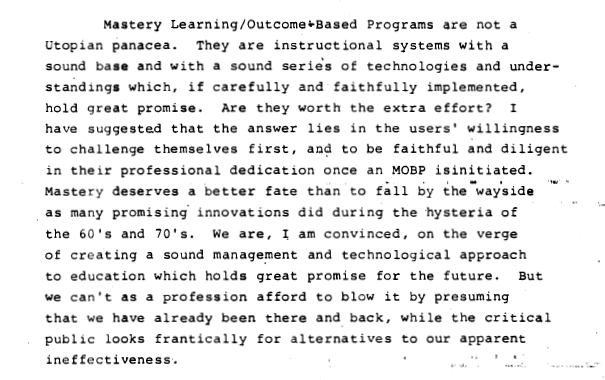
This first sentence below says it all. "Mastery Learning/ Outcome-Based Programs are not a Utopian panacea." Rather it is a totalitarian nightmare. Especially for children.


John R. Champlin, "Is Creating a Learner-Mastery Outcome-Based Program Worth the Extra Effort? A Superintendent's Perspective, published in Project SAFE report. 


Don't be dumbed down. Read up on the history of Skinner's method, how it rapidly became the global model for education reform. Those supporting Common Core and/or "choice" hope that you won't know the history behind this method. Here it is in their own words, which continues the explanation that is found in the quoted material above:
Several major multi-million dollar programs were initiated in the 1960’s consistent with the achievement of the goals stated above. The major focus on development of more effective management-for-results practices and application was Operation PEP, State of California. This was a multi-year program involving several hundred senior educational administrators across the state. Dr. Robert E. Corrigan, as director of the training programs, offered to these administrators skills in management-for-results practices encompassed in his “Systematic Approach for Effectiveness” (SAFE). The acceptance of these practices by these senior educational practitioners is evidenced by the fact that they were applied by Title III management centers across the state of California after the federal funds were removed.

A second key thrust by the Department of Education (1965–1968) was to support the development of new teaching practices which would prove more effective in the delivery of success for learners. A major program was funded for the installation of a Teacher Fellowship Program at Chapman College, Orange, California. This program was headed by Dr. Robert E. Corrigan to develop a Masters Degree in Instructional Systems Design (ISD). This developing program focused on the design of a new learning-centered technology developed by the Corrigans to assure predictable mastery by all learners of all relevant skills and knowledge in the curricula offered in our schools.


…In these two volumes presented herein by the Corrigans, you are offered the PROOF of these most effective results-focused practices by many school districts both large and small, both urban and rural, in a variety of areas across our country over a period of 22+ years (1960–1983).


Since the 1960s, these effective management-for-results practices have expanded to include the required use of micro computer management systems to control for the delivery of cost-effective results for learners, for the educational practitioners, and the taxpayers.

To download this report, go to AmericanDeception.com and use the search box, type in "SAFE." A page will pop up with this file on it. Simply click the red "Download Now" button to get the full report:

Wednesday, October 8, 2014

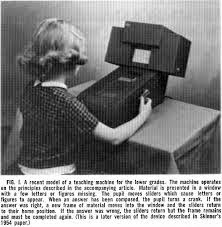
Teaching Machines and Programmed Learning

Day 8: Skinner Horror Files

Teachings Machines => Computers

Computers have become the perfect vehicle for those who want to implement societal operant conditioning methods on the children and populace. These change agents desire to break down human behavior into the lowest common denominator, and measure it bit by bit via conditioned responses desired (or required) by the powers-that-be. In this manner a new society will be formed.

B.F. Skinner authored a chapter in a book titled Teaching Machines and Programmed Learning: A Source Book, edited by A.A. Lumsdaine and Robert Glaser in 1960. Appendix II of my book gives many interesting excerpts from this book. Skinner's chapter "The Science of Learning and the Art of Teaching" provide some clues to his view of education. First note that the human is merely an "organism" to Skinner.
In all this work, the species of the organism has made surprisingly little difference. It is true that the organisms studied have all been vertebrates, but they still cover a wide range. Comparable results have been obtained with rats, pigeons, dogs, monkeys, human children, and most recently... with human psychotic subjects. In spite of great phylogenetic differences, all these organisms show amazingly similar properties of the learning process. It should be emphasized that this has been achieved by analyzing the effects of reinforcement and by designing techniques which manipulate reinforcement with considerable precision. Only in this way can the behavior of the individual organism be brought under such precise control. It is also important to note that through a gradual advance to complex interrelations among responses, the same degree of rigor is being extended to behavior which would usually be assigned to such fields as perception, thinking, and personality dynamics. (p. 103)
Note the admission that the goal is "controlling the organism." And the teacher's "inadequacy" without "mechanical devices." And the sentence highlighted in bright red.
Watch: http://www.youtube.com/watch?v=E5T-rq06Xe0
These requirements are not excessive, but they are probably incompatible with the current realities of the classroom. In the experimental study of learning it has been found that the contingencies of reinforcement which are most efficient in controlling the organism cannot be arranged through the personal mediation of the experimenter. An organism is affected by subtle details of contingencies which are beyond the capacity of the human organism to arrange. Mechanical and electrical devices must be used. Mechanical help is also demanded by the sheer number of contingencies which may be used efficiently in a single experimental session. We
See HERE
have recorded many millions of responses from a single organism during thousands of experimental hours. Personal arrangement of the contingencies and personal observation of the results are quite unthinkable. Now, the human organism is, if anything, more sensitive to precise contingencies than the other organisms we have studied. We have every reason to expect, therefore, that the most effective control of human learning will require instrumental aid. The simple fact is that, as a mere reinforcing mechanism, the teacher is out of date. This would be true even if a single teacher devoted all her time to a single child, but her inadequacy is multiplied many-fold when she must serve as a reinforcing device to many children at once. If the teacher is to take advantage of recent advances in the study of learning, she must have the help of mechanical devices.
(p. 109)

In case anyone doubts my stance that this is a deliberate dumbing down of america, see this sentence highlighted in bright red:
The important features of the device are these: Reinforcement for the right answer is immediate. The mere manipulation of the device will probably be reinforcing enough to keep the average pupil at work for a suitable period each day, provided traces of earlier aversive control can be wiped out. A teacher may supervise an entire class at work on such devices at the same time, yet each child may progress at his own rate, completing as many problems as possible within the class period. If forced to be away from school, he may return to pick up where he left off. The gifted child will advance rapidly but can be kept from getting too far ahead either by being excused from arithmetic for a time or by being given special sets of problems which take him into some of the interesting by-paths of mathematics. (p. 110)
Skinner's goal is the "manipulation" of human behavior via the "manipulation" of the device. And mechanistic devices such as computers assist with that manipulation.
Some objections to the use of such devices in the classroom can easily be foreseen. The cry will be raised that the child is being treated as a mere animal and that an essentially human intellectual achievement is being analyzed in unduly mechanistic terms. Mathematical behavior is usually regarded not as a repertoire of responses involving numbers and numerical operations, but as evidence of mathematical ability or the exercise of the power of reason. It is true that the techniques which are emerging from the experimental study of learning are not designed to “develop the mind” or to further some vague “understanding” of mathematical relationships. They are designed, on the contrary, to establish the very behaviors which are taken to be the evidences of such mental states or processes. This is only a special case of the general change which is under way in the interpretation of human affairs. An advancing science continues to offer more and more convincing alternatives to traditional formulations. The behavior in terms of which human thinking must eventually be defined is worth treating in its own right as the substantial goal for education. (p. 111)
Reproduced from pages A-8 and A-9 of Appendix of my book the deliberate dumbing down of america.